
Octaves
The basic miracle of music.
Octaves have been called the basic miracle of music. An octave is the distance to a pitch that is twice the frequency of its root note, and to human ears it sounds like the same note repeated at a higher pitch. This quirk of human brains, and of some other animals (but not all), is what makes our perception of music possible.
Octaves are called "perfect" intervals, because the sound waves of the two pitches overlap almost perfectly.
Playable octave shapes
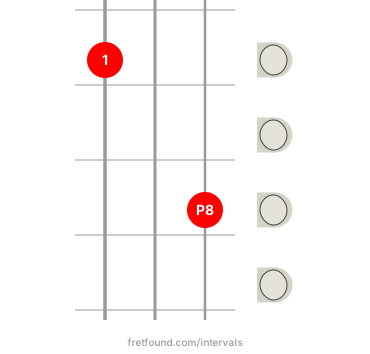
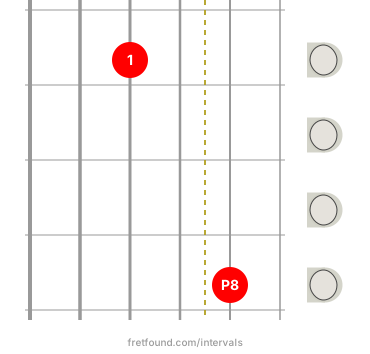
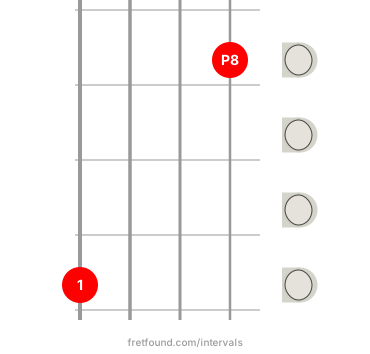
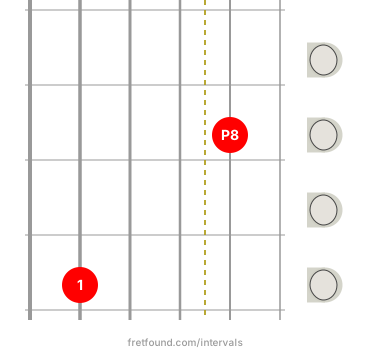
The octave has one main shape ahead on the fretboard, and one behind. As always, when shapes cross the third rail between the second and third strings, the higher-pitched note moves forward one fret.
Octave ahead
The octave shape ahead is "skip one string, skip a fret ahead". It spans three fingers.
Octave behind
The octave shape behind is "skip two strings, skip two frets back". It's a bit of a reach, spanning four fingers across two strings.
Octaves on one string
The octave of an open guitar string is found at the 12th fret: exactly half the overall length of the string. Halving the length of a string doubles the frequency at which it vibrates.

Octaves on adjacent strings
On adjacent strings, octaves are found seven frets apart (or eight, when crossing the third rail).

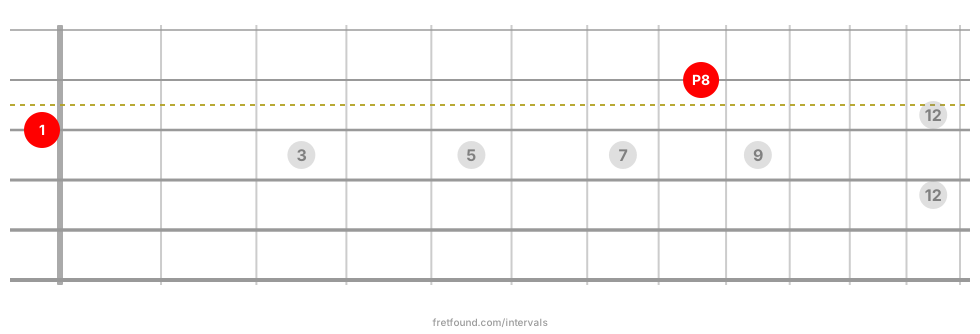
Fretboard navigation
Octaves help orient us on the fretboard even more than unisons, because they help us find all the different locations of the 1. The one, or tonic, is what all the other intervals are measured from. The one determines what all the other notes mean and how they feel. Knowing where the 1 is on the fretboard is the surest way to keep from getting lost.
Exercises
Practice exercises
-
Find octaves for a random note. Play a note on the guitar at random, then locate the octaves around it that can be reached without moving the fretting hand out of position.
-
Find a specific note all over the fretboard. Choose a note like "C" and find all of its octaves and unisons, focusing on the note name as you play it. Notice the fret markers around it, to help remember its locations. This is a great way to begin to memorize the notes on the fretboard.