
Sixths
Expressive, airy, inside-out cousins of the thirds.
Sixths are larger intervals, far away from home (the unison or tonic), which gives them a spacious and uplifting feeling, bright and airy. They are inversions of thirds, so they can glide over a chord progression masquerading as familiar yet strange expressions of the soul of the expected chords.
Major sixth
Major sixth ahead
The major sixth shape ahead is "one string over, skip three frets ahead". (The shape that crosses the third rail is not easily playable.)
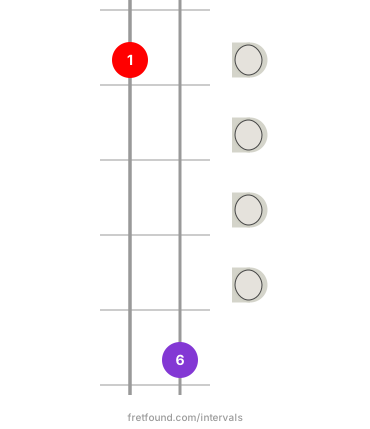
Major sixth behind
The major sixth shape behind is "skip a string and one fret back".
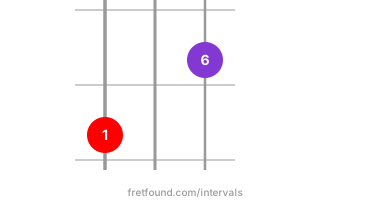
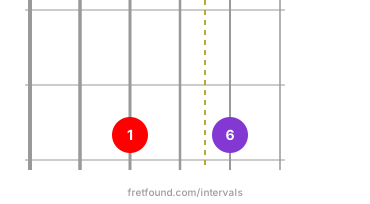
Notice that the major sixth shapes are on the same fret as the major third shapes, but on the next string over.
Inversion of minor third
The distance from a major sixth to the octave is a minor third. In other words, a major sixth is an inversion of a minor third. These diagrams should help make that clear:


Minor sixth
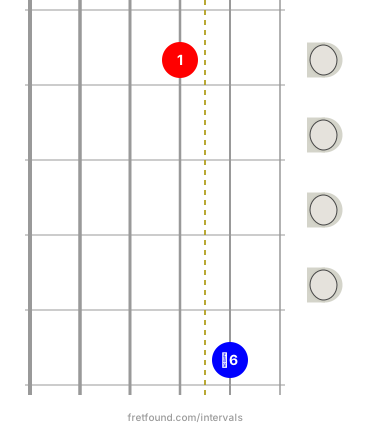
Minor sixth ahead
The minor sixth shape ahead is "one string over, skip two frets ahead". Notice that it's located one fret behind the major sixth.
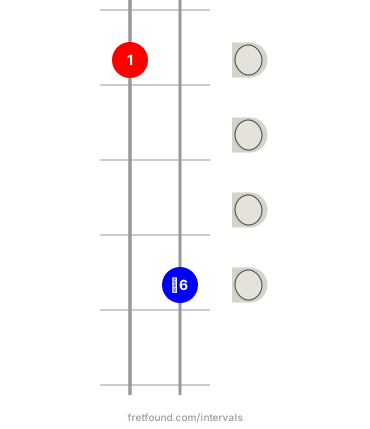
Minor sixth behind
The minor sixth shape behind is "skip a string, skip a fret back".
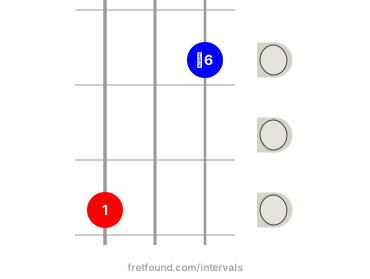
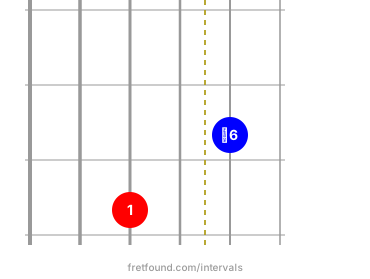
Notice that the minor sixth shapes are on the same fret as the minor third shapes, but on the next string over.
Inversion of major third
The distance from a minor sixth to the octave is a major third. In other words, the minor sixth is an inversion of a major third. These diagrams should make that clear:


Double-stop sixths
Because they are inversions of thirds, sixths can be used as an alternative sounding replacement for the stacked thirds that make up any chord.
Sixths are commonly played as double-stops on the higher-pitched strings, sliding forward or backward on the fretboard and suggesting a variety of chords from the key while they glide toward a new position. These two-note shapes that cross the third rail are easy and convenient to play, and it's delightfully fun to slide through the changes this way.
Exercises
Practice exercises
-
Find ascending sixths across strings. Pick a random location on the fretboard and find major and minor sixth intervals on the higher-pitched string.
-
Find descending sixths across strings. Pick a random location on the fretboard. Imagine that you are starting on the higher-pitched note of the interval, and find descending major and minor sixth intervals on the lower-pitched strings.
-
Explore double-stop sixths. Practice sliding forward and backward on the fretboard with sixth intervals on the higher-pitched strings, outlining one of the stacked thirds in triad chords. For example:
- Play a minor sixth interval at any fret. Imagine it outlines the root and inverted third of a major I chord (31).
- Slide the lower-pitched note forward one fret and play a minor sixth. This outlines the 5 and ♭7 of the V7 chord, (the 2 and 4 of the key).
- Slide the lower-pitched note forward 2 more frets and play another minor sixth. (This outlines part of the I chord again, 53)
- Play the progression in reverse, sliding backward on the fretboard.